
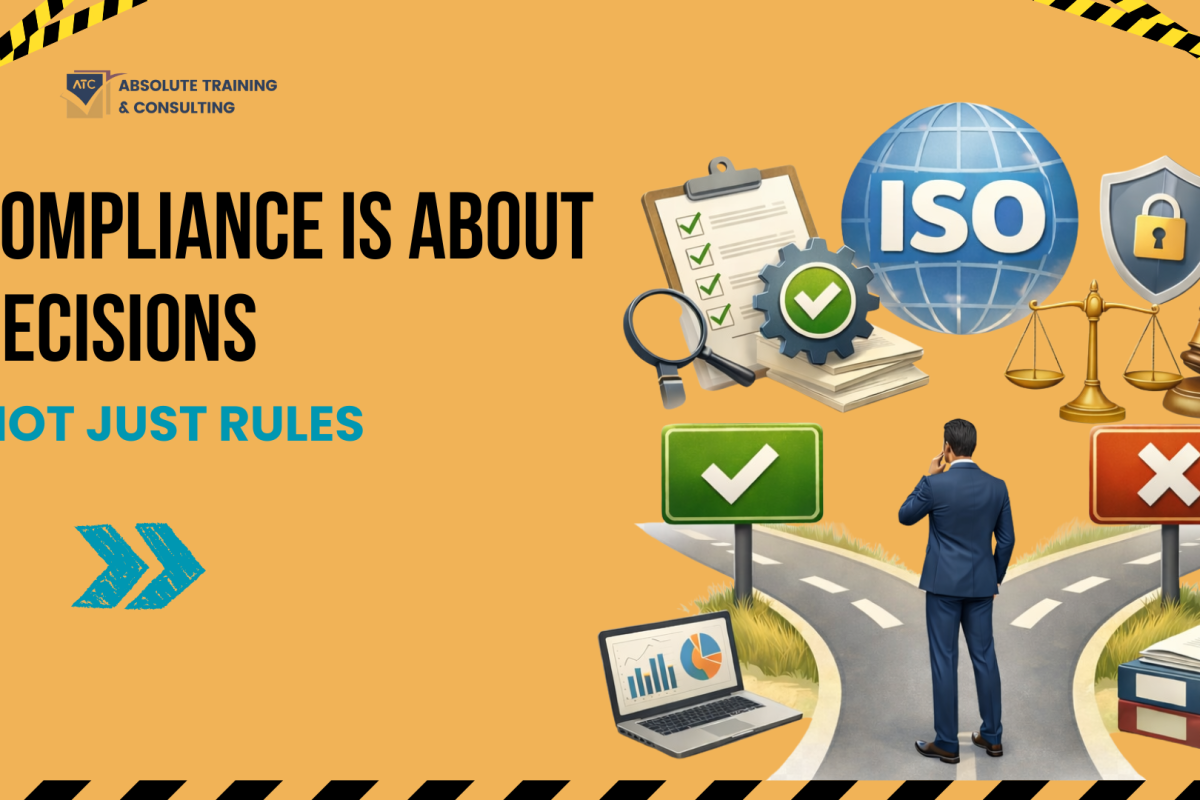
When people hear the word compliance, they often think of rules, checklists, and inspections.
In reality, compliance has very little to do with rules alone — and everything to do with decisions.
Every incident, every non-conformance, and every operational failure begins with a decision someone made, or failed to make.
Understanding this shift is critical for organizations that want sustainable performance rather than temporary fixes.
Compliance Is a Daily Choice, Not a Department
Many organizations treat compliance as something handled by a specific department — HSE, Quality, or Compliance.
But in practice, compliance is shaped every day by decisions made on the ground:
- A supervisor choosing speed over procedure
- A manager approving work without proper risk review
- A worker bypassing a control to meet a deadline
These decisions rarely come from negligence. They come from pressure, assumptions, and unclear priorities.
Compliance lives in moments, not in manuals.
Why Rules Alone Don’t Change Behavior
Rules are important, but rules do not control behavior — people do.
In many workplaces, rules are:
- Written for audits, not for reality
- Too complex for daily use
- Copied from templates without context
- Disconnected from actual job tasks
When people don’t understand why a rule exists, they naturally find ways around it.
This doesn’t make them careless — it makes them human.
Decision-Making Under Pressure
Most unsafe or non-compliant decisions are made under pressure:
- Time pressure
- Production targets
- Resource limitations
- Client expectations
In these moments, people rely on experience and instinct, not procedures.
If systems are not designed to support good decisions under pressure, they fail exactly when they are needed most.
The Role of Leadership in Compliance
Leadership sets the tone for how decisions are made.
When leaders:
- Accept shortcuts to meet deadlines
- Ignore early warning signs
- React only after incidents occur
They unintentionally teach others that compliance is optional.
On the other hand, when leaders consistently ask:
- “Is this safe?”
- “Have risks been considered?”
- “Do we have the right controls in place?”
They reinforce a culture where compliance becomes part of everyday thinking.
Why Compliance Often Feels Like a Burden
Compliance feels heavy when it is disconnected from purpose.
People resist compliance when:
- They don’t see how it protects them
- It slows down work without clear benefit
- It is enforced without explanation
When compliance is linked to real outcomes — safety, quality, reputation, and sustainability — it stops feeling like bureaucracy and starts making sense.
Shifting from Rule-Following to Risk Thinking
Effective organizations move away from rigid rule-following and toward risk-based thinking.
This means asking:
- What could go wrong here?
- What would be the impact?
- What controls actually work in this situation?
This approach allows flexibility without sacrificing safety or quality.
The GCC Perspective
In the GCC, where operations often involve:
- Multinational workforces
- High-risk industries
- Fast-paced project environments
Decision-making becomes even more critical.
Strong compliance cultures are built when organizations invest in:
- Clear communication across languages and roles
- Practical training linked to real tasks
- Leadership visibility on site
- Consistent reinforcement of expectations
Compliance succeeds when it fits the operational reality, not when it fights it.
The Bigger Message
Compliance is not about following rules blindly.
It is about making informed, responsible decisions — even under pressure.
When people understand why something matters, they are far more likely to do it right.
Final Thought
Good systems guide decisions.
Strong leadership shapes behavior.
True compliance emerges when both work together


