
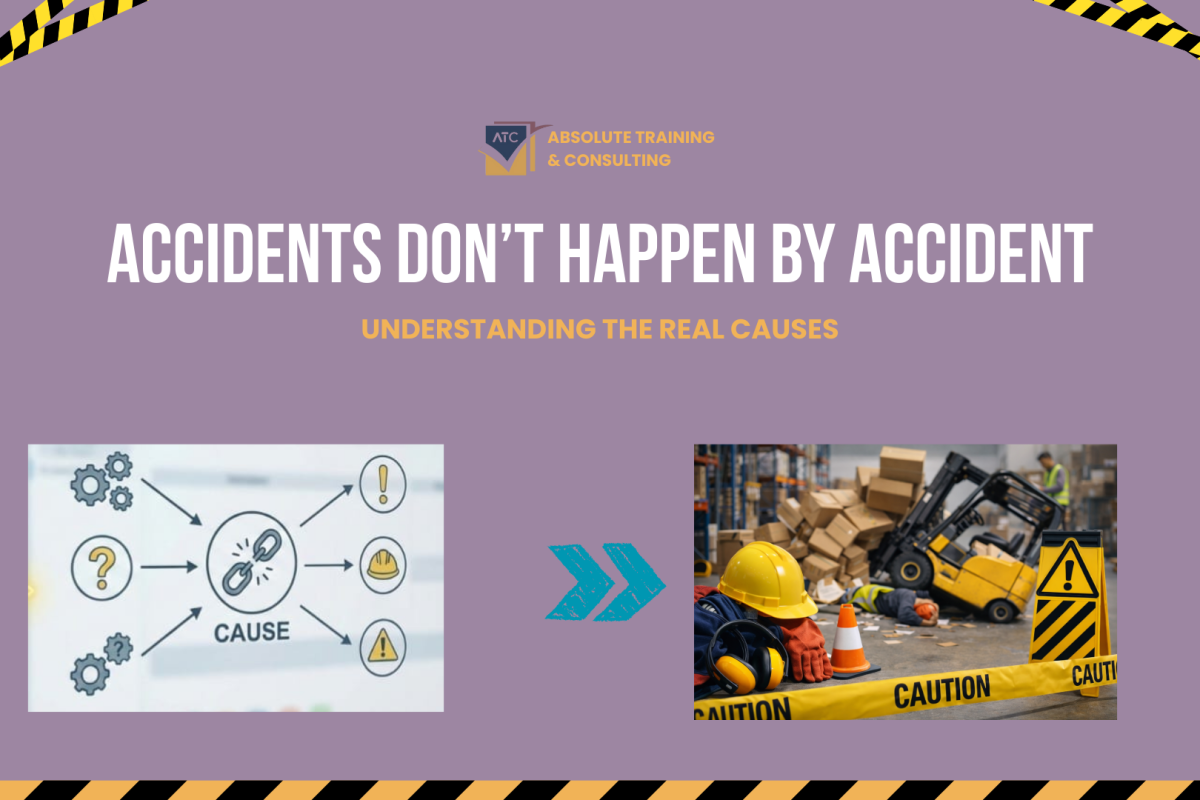
Accidents at work are often described as “unfortunate events” or “bad luck.”
But in reality, very few workplace accidents are truly accidental.
Most incidents are predictable. Many are preventable. And almost all of them leave warning signs long before something goes wrong.
Understanding why accidents happen is the first step toward building safer, more reliable, and more productive workplaces.
The Myth of Human Error
When an accident happens, the first reaction is often to blame the person closest to it.
“He wasn’t careful.”
“She didn’t follow the procedure.”
“They were in a hurry.”
While human error may be visible at the surface, it is rarely the real cause.
People don’t come to work intending to get injured. Most employees want to do their job, finish on time, and go home safely. When something goes wrong, it usually means the system around them failed to support safe behavior.
Accidents Are the End Result of Weak Systems
Every accident has a history.
Long before an incident occurs, there are small signals:
- Minor near-misses that were ignored
- Unsafe conditions that became “normal”
- Procedures that were outdated or impractical
- Training that was delivered but not reinforced
- Pressure to meet deadlines at the expense of safety
These are not random events. They are signs of system weakness.
When safety systems are strong, they catch problems early.
When systems are weak, incidents are only a matter of time.
Why Unsafe Behavior Often Makes Sense to Workers
One of the most misunderstood aspects of safety is human behavior.
People usually take shortcuts for logical reasons:
- The job has to be finished quickly
- The procedure takes too long
- Tools or equipment are not available
- Past shortcuts never caused problems
From the worker’s perspective, the shortcut works — until it doesn’t.
This is why blaming individuals rarely improves safety. The real question should be:
“Why did the system allow this behavior to feel acceptable?”
The Role of Leadership in Accident Prevention
Safety is strongly influenced by leadership behavior, even when leaders are not present on site.
Employees quickly learn what truly matters by observing:
- What gets rewarded
- What gets ignored
- What happens after an incident
- Whether safety concerns are taken seriously
If production is always prioritized over safe execution, the message becomes clear — even if safety policies say otherwise.
Strong safety cultures are built when leaders consistently support safe decisions, even when they affect schedules or costs.
Why Procedures Alone Don’t Prevent Accidents
Many organizations believe that having documented procedures means risks are controlled. In reality, procedures are only effective when they are:
- Practical and easy to follow
- Aligned with actual work conditions
- Understood by the people using them
- Regularly reviewed and improved
A procedure that exists only in a file or on a shelf does not protect anyone.
Safety lives in behavior, not in documents.
Accidents Are Symptoms, Not Root Causes
An accident is often the final visible outcome of deeper problems such as:
- Poor communication
- Inadequate supervision
- Lack of training or competence
- Weak planning and risk assessment
- Absence of accountability
Treating the injury without addressing these causes only ensures that another incident will occur — often in a different form.
What Prevents Accidents in the Real World
Organizations that reduce incidents consistently tend to focus on:
- Strong leadership involvement
- Clear roles and responsibilities
- Practical risk assessments
- Ongoing training and awareness
- Open reporting without fear of blame
- Continuous review and improvement
Safety becomes part of how work is done — not an extra task.
The Bigger Picture
Accidents are not isolated events. They are indicators of how well an organization manages risk, people, and processes.
When systems are designed thoughtfully, supported by leadership, and understood by workers, safety becomes predictable — not accidental.
Understanding this shift in thinking is the foundation of effective health, safety, and quality management.
Final Thought
Accidents don’t happen because people are careless.
They happen because systems allow carelessness to survive.
Fix the system, and safety follows

